
Textiles, footwear & apparel
Municipal industry policy identifies Jinjiang and Shishi as textile and apparel centres. Technical questions range from material selection and sampling to manufacturing changing collections. [1]
Southeastern China / Fujian
Textile and footwear production, finishing and specialist suppliers.
Quanzhou’s industry is distributed across distinct production locations. Jinjiang and Shishi are associated with textiles, footwear and apparel, while other county-level cities broaden the range. Companies can examine how materials, processing and product engineering are coordinated.
Explore industrial locationsSelected industrial strengths and questions for further investigation.
01 / Industry profile
This overview focuses on the topics covered by our location research so far. It is not a comprehensive industry directory.
Municipal industry policy identifies Jinjiang and Shishi as textile and apparel centres. Technical questions range from material selection and sampling to manufacturing changing collections. [1]
In 2025, the environmental authority documented concentrated dyeing and finishing locations in Jinjiang and Shishi. Steam supply, water treatment and process control are important topics for modernisation discussions. [2]
The city overview describes further specialisms, including sanitary products and stone processing in Nan’an, plus equipment and production-related services. These areas should be considered separately from the textile route. [3]
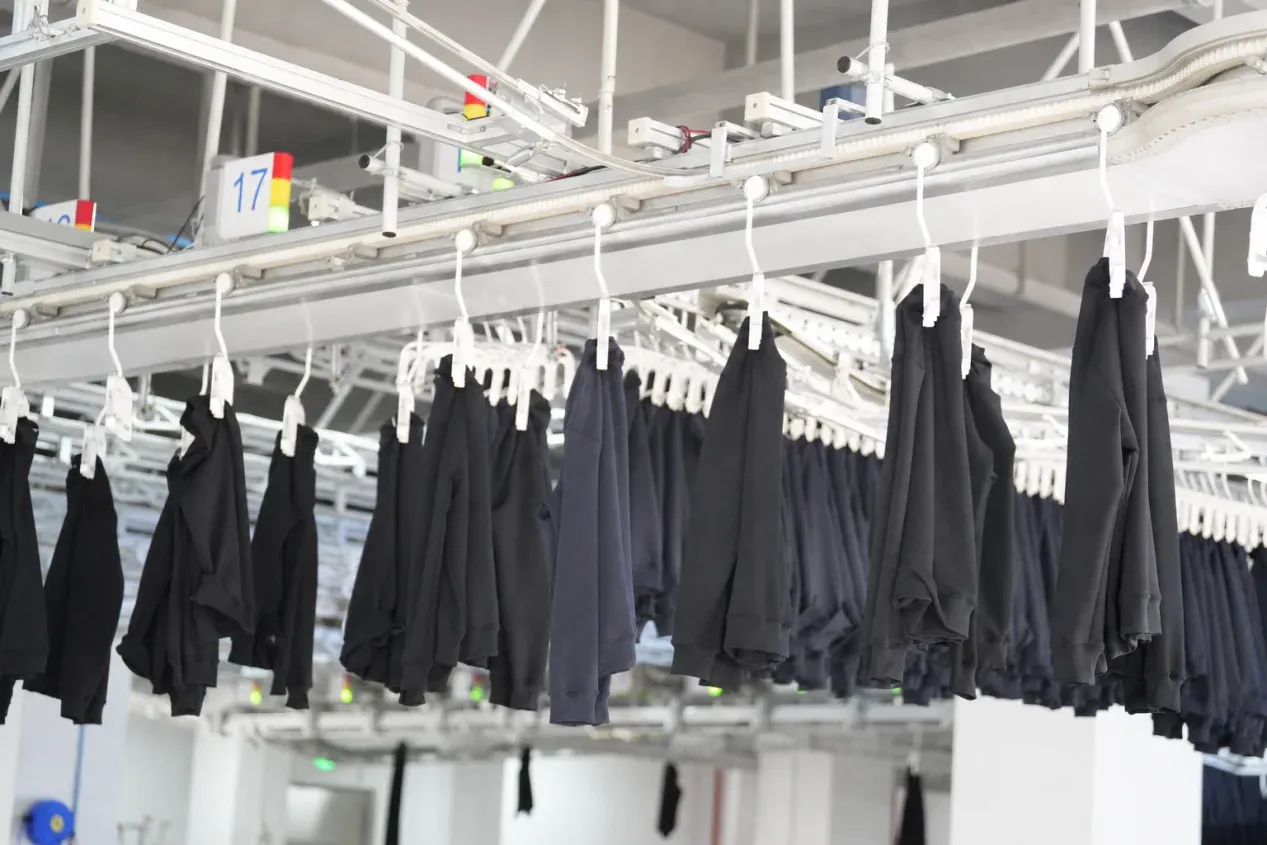
Quanzhou
Supplied project material from Quanzhou. The image illustrates a possible observation layer in garment production; the facility and visitor access are not publicly confirmed.
Sino-Cooperation · supplied project material02 / Industrial locations
Jinjiang, Shishi and Nan’an are distinct county-level cities within Quanzhou. Proximity on the map replaces neither supplier assessment nor confirmation of collaboration.
Footwear, apparel and product engineering
Jinjiang is a focal area within the wider Quanzhou municipality. Sourcing and engineering discussions benefit from starting with a specific product, its materials and the manufacturing processes required. [1]
How do new materials move from sampling into stable series production?
Apparel and textile finishing
The authority names the Dabao, Wubao and Jinshang dyeing and finishing areas within a joint industrial-park plan. Discussions should distinguish individual companies from shared infrastructure. [2]
Which energy and water consumption can be attributed to a specific process?
Sanitary products and stone processing
Nan’an adds different material and processing tasks to the footwear and apparel clusters. The appropriate route depends particularly on material, product and the desired processing scope. [3]
Which processing and inspection tasks should be performed locally?
One possible technical assessment framework
Editorial structure for a technical discussion; not a diagram of established supply relationships.
03 / For your business
The specific task determines which companies, technical teams and locations are relevant.
Compare sample quality, change handling, traceability and delivery capability. One successful sample is insufficient for production approval.
Start with a measurable bottleneck, such as material supply or quality inspection. Account for changing materials and order sizes.
Collect process-level consumption data and distinguish factory equipment from shared infrastructure. This provides a basis for scoping a meaningful pilot.
Deep Dive · Quanzhou
A three-day programme outline is already available for this topic. Hosts and dates are agreed individually.
View the three-day Deep Dive ↗Your next step
Tell us your topic and the decision you are preparing. We can then propose relevant locations and discussions.
Naming a company does not confirm visit access. Meetings and access arrangements are confirmed individually.
Research & currency
Based on existing location research, supplemented by the linked primary sources. Editorial version: 28 September 2026. Older reports are labelled accordingly; company information does not replace an independent plant assessment.