
How much speed is actually created by spatial supply-chain density?
Chendai and Yinglin connect manufacturing with material and service functions. Sampling lead times, handovers, minimum quantities and the sources of rapid response could be tested.
How sports and footwear production in Jinjiang connects with garments, trade and concentrated dyeing and finishing infrastructure in Shishi—and which questions international companies can actually test here.
Quanzhou is not a single industrial node. The evidence instead points to a network of specialised production environments: Chendai concentrates sports footwear and components, Yinglin garments and close-to-body sportswear, while Shishi links garment manufacturing and trade with a spatially concentrated dyeing and finishing base.Sources [3][4][5][6][8][14]
For international companies, the decisive question is therefore not “Which famous brands are based there?” More useful questions concern how short supply chains, small batches, material inspection, energy and water use, and future European product-data requirements are handled operationally.Sources [5][8][10][11][12][13]
The learning value lies not in cluster size alone, but in identifying where supply, flexible manufacturing, process infrastructure and market access are close enough to make specific mechanisms testable.
The figures describe regional scale. They do not establish which factory is relevant or accessible for a specific question.
Local official industry figure; the statistical boundary is not disclosed.
Sources [2]
Official regional communication figure; not audited company revenue.
Sources [2]
Applies in 2025 to Quanzhou industrial firms above the statistical threshold, not to every company.
Sources [1]
As of 2025; strong evidence of concentrated process infrastructure, not a commitment to host visitors.
Sources [8]
The learning value comes from the relationships between material, process, quality, data and market—not from a list of famous brands.
In Chendai and Yinglin, speed comes not only from factory density. Materials sourcing, sampling, design, logistics and industry coordination are also close by. The strongest public time claim applies specifically to Yinglin, where local sources describe upstream and downstream links within 30 minutes.
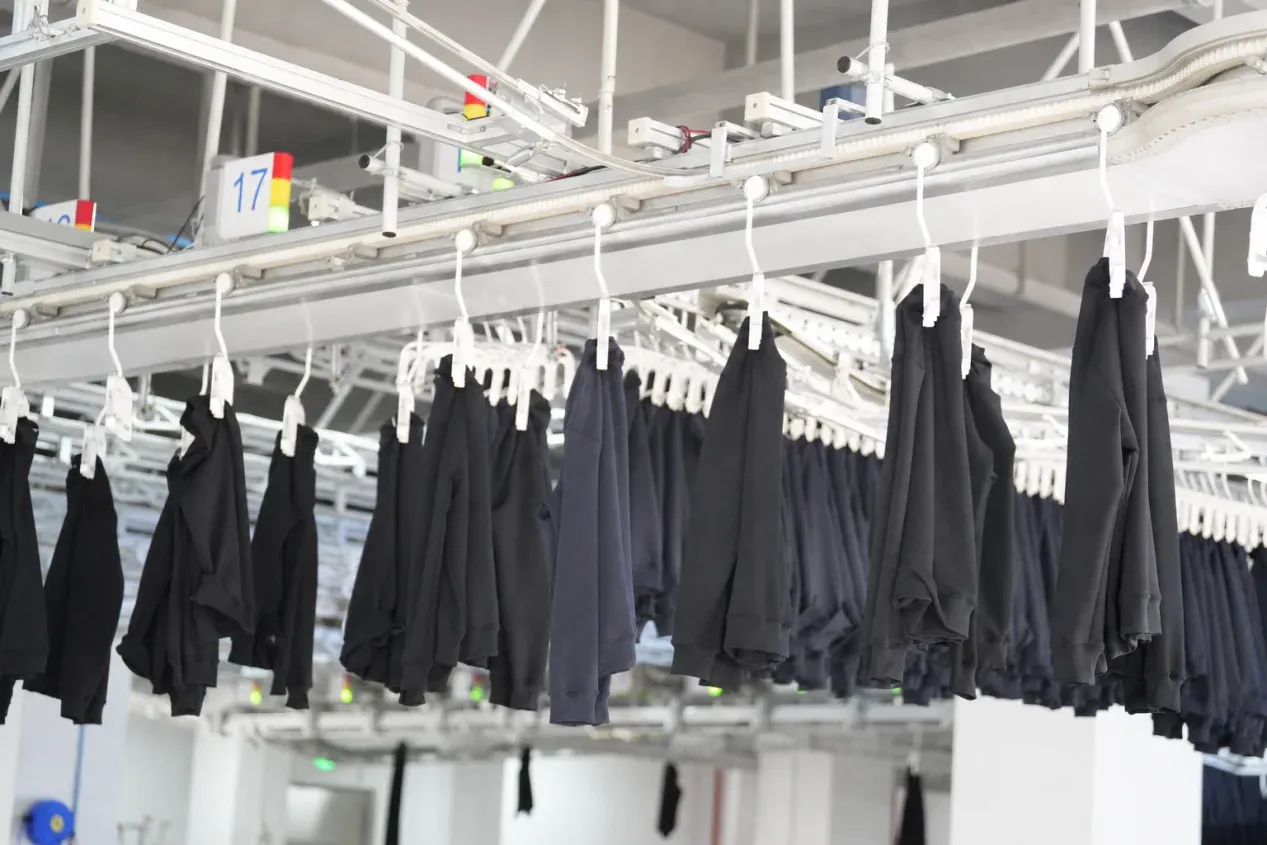
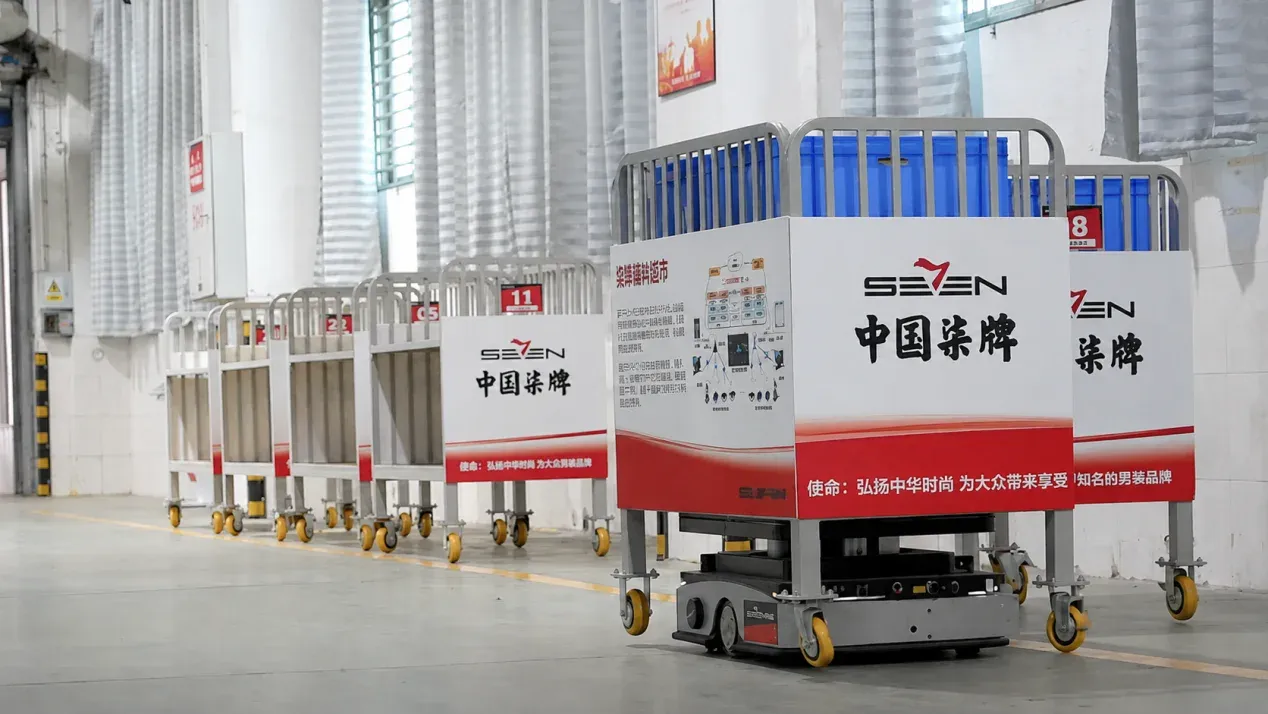
Digital applications are visible among leading and selected specialised companies—in material flow, planning, quality inspection and customised production. Maturity remains uneven, however. Reflective or deformable materials and frequent style changes remain technically demanding.
Shishi’s concentrated dyeing and finishing environment makes water, steam, waste heat, chemicals and wastewater visible as connected operating questions. Published retrofits show measurable savings, but these cannot be generalised as a cluster-wide average.
Upcoming EU regulation expands the industrial question: alongside cost, quality and lead time, material, chemical and lifecycle data will matter more. Textile-specific rules are still being developed, so the present issue is data readiness—not selling a supposedly mandatory DPP certificate.
These questions are derived from the evidenced structures. What can be observed on site is verified only during project scoping.
Chendai and Yinglin connect manufacturing with material and service functions. Sampling lead times, handovers, minimum quantities and the sources of rapid response could be tested.
Small batches, frequent variants and difficult material surfaces allow a more realistic assessment of robotics, intralogistics, machine vision and planning systems than a standalone demo.
The spatial concentration of dyeing firms in Shishi provides a concrete setting for distinguishing process control, shared infrastructure and the return on efficiency investments.
An export-oriented production system can reveal where data is created today, where it is lost and how material, chemical and sustainability information would need to be connected across suppliers.
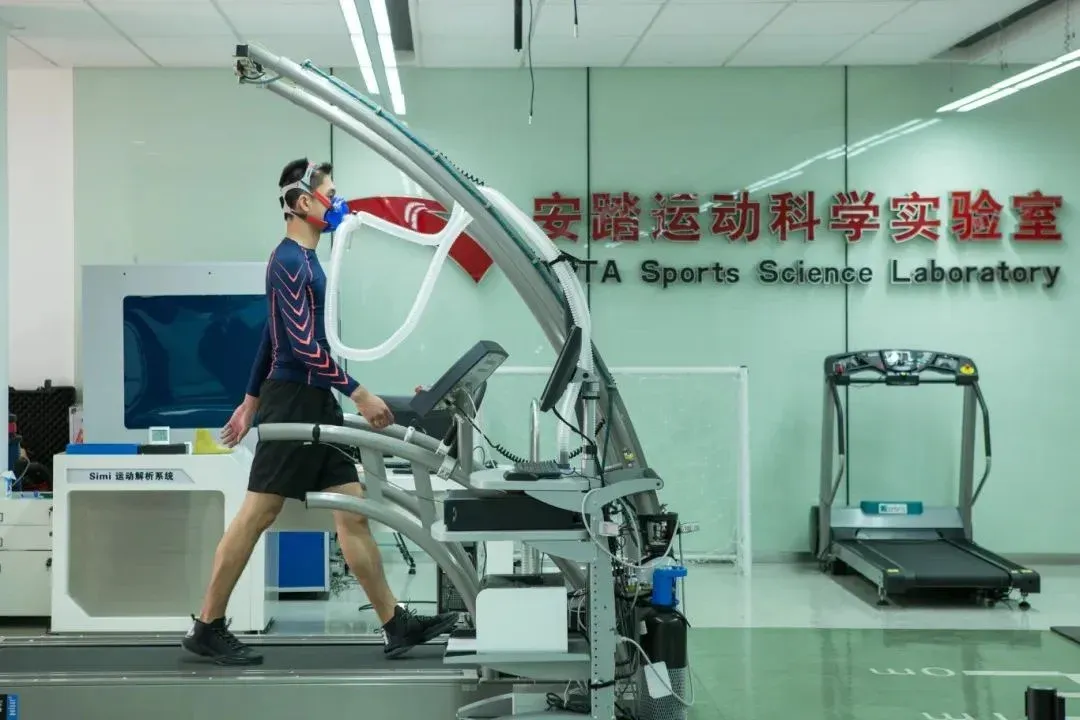
The available project material illustrates possible levels of observation. It does not document a general commitment by the facilities shown to receive visitors.
The roles help select conversations by function—from materials to market and data.
Footwear components, textiles, functional materials and sourcing form a learning layer of their own—not merely a list of upstream suppliers.
Production planning, material flow, cutting, sewing, assembly and quality inspection need to be read as one system under frequent product variation.
The Shishi park concentrates process-intensive firms and makes shared environmental and utility infrastructure visible as an industrial function.
Innovation centres, markets and testing roles connect physical production with product development, distribution and future traceability.
“Textile and Footwear in Quanzhou” is still too broad for a specific journey. It is therefore translated into tighter industrial areas and clearly bounded learning questions.
Chendai, with the International Shoes and Textile City as a potential sourcing and coordination anchor.
Does proximity between component suppliers, production and the market demonstrably shorten development and sourcing cycles?
Next validation step: Verify the sub-area and observable processes
Yinglin, including garment firms and the innovation centre for close-to-body sports products.
How do design, material selection, sampling and flexible small-batch manufacturing interact?
Next validation step: Verify the sub-area and observable processes
A functional area to be validated across garment production, professional markets, digital trade and rapid order fulfilment.
How are market and order data translated into production planning and small batches?
Next validation step: Verify the sub-area and observable processes
An officially defined 9.97 km² industrial park spanning three towns, with a highly concentrated dyeing and finishing base.
Which operating and infrastructure decisions measurably reduce water, steam and heat demand?
Next validation step: Verify the sub-area and observable processes
This is a learning logic, not a confirmed itinerary. Hosts, access and travel times are defined only after the participant profile and direct coordination.
The route would not attempt to tick off all four nodes. It would combine only those that support one shared question and leave enough time for technical discussion.
Frame the system and test how material selection, sampling and supplier coordination create speed.
Investigate production flow, changeovers, intralogistics, inspection and the limits of current automation.
Connect water and energy questions with product and supply-chain data, then test specific hypotheses with relevant roles.
Potential fields include inspection of reflective or deformable materials, adaptive robotics, rapid changeover and the connection of APS, MES and quality data.
What must be clarified before a recommendation: Cycle time, batch size, style changes, scrap, installed equipment and the facility’s economic target.
Potential fields include steam optimisation, waste-heat recovery, online energy measurement, water reuse and more precise process control.
What must be clarified before a recommendation: Actual mass and energy balances, process boundaries, permits, investment needs and payback time.
A joint project could structure material, supplier, chemical, carbon and lifecycle data so exporters are better prepared for future rules and customer audits.
What must be clarified before a recommendation: Specific product, target EU market, existing data sources, supplier coverage and the final legal act.
Figures and market statements are traced to the linked primary or institutional sources. Last checked: 04 Sept 2026.
Share the segment, participant profile and decision to be supported. We will narrow the relevant learning node for Textile and Footwear before verifying possible counterparts and access.
Discuss the question ↗