China Industry Deep Dive is Sino-Cooperation’s brand for industrial and technical visits and a platform for cooperation between German and Chinese industry participants. Led by Wei Zhang and Yijun Yu, the core team connects the network and operational infrastructure in China with the sector expertise of experienced partners in Germany and China.
Quanzhou: understanding how China’s traditional manufacturing industry moves towards smart production and global brands
This delegation visit explains how Quanzhou connects private companies, specialised supply chains, smart production equipment, new-materials development and brand management—helping the textile, clothing and footwear industries move towards higher value creation.
Core strength: a comprehensive industrial ecosystem built on specialised roles
Located on China’s southeast coast, Quanzhou offers particularly revealing insights into private-sector manufacturing and the development of industrial clusters.
Centred on Jinjiang and Shishi, the textile, clothing and footwear industries cover the entire value chain: fabrics, dyeing and finishing, footwear materials, accessories and production equipment, through to manufacturing and trade. The dense concentration of brands, specialist manufacturers and suppliers enables close collaboration in product development, sampling, production and delivery.
For participants, the central question is: how can a company use its regional industrial network to access manufacturing and innovation capabilities far beyond its own scale?
Manufacturing modernisation: connecting automated equipment into an effective production system
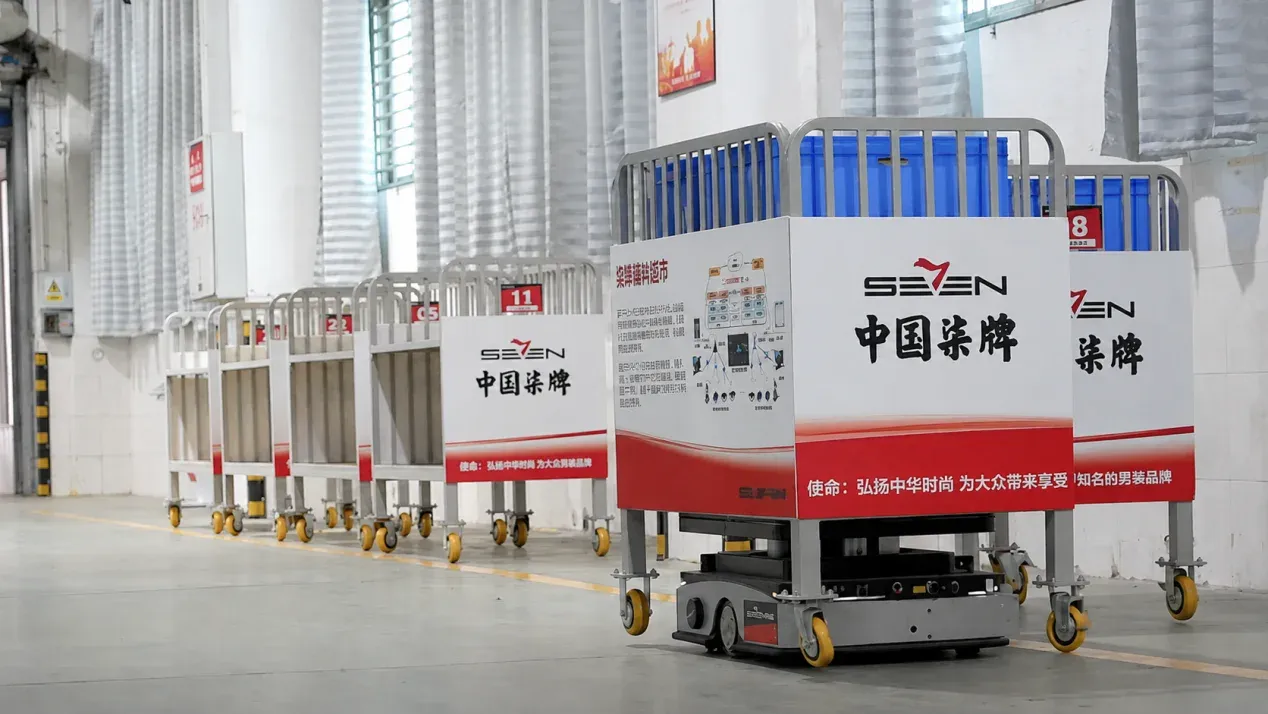
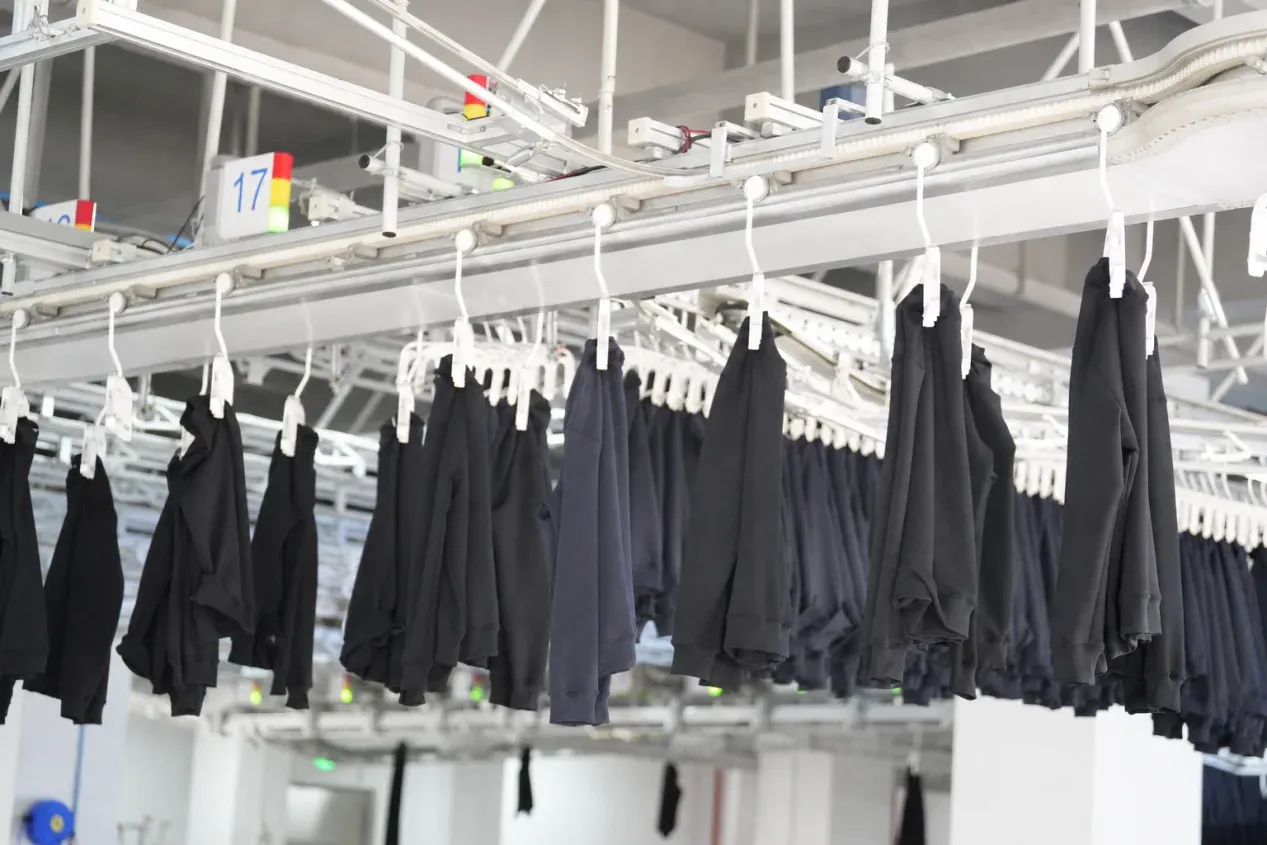
Companies such as LILANZ and SEVEN have integrated automated cutting, intelligent overhead conveyor systems, production-data management and automated logistics into their manufacturing. These examples show how traditional clothing and footwear companies progressively modernise existing factories while improving material flow, production organisation and delivery performance.
The journey examines the decisive questions: which operations are already suitable for automation? Which still depend on human experience? And how do companies judge whether an investment is worthwhile across different materials, styles and order sizes?
Higher value creation: materials, research and brand management as a shared basis for competitiveness
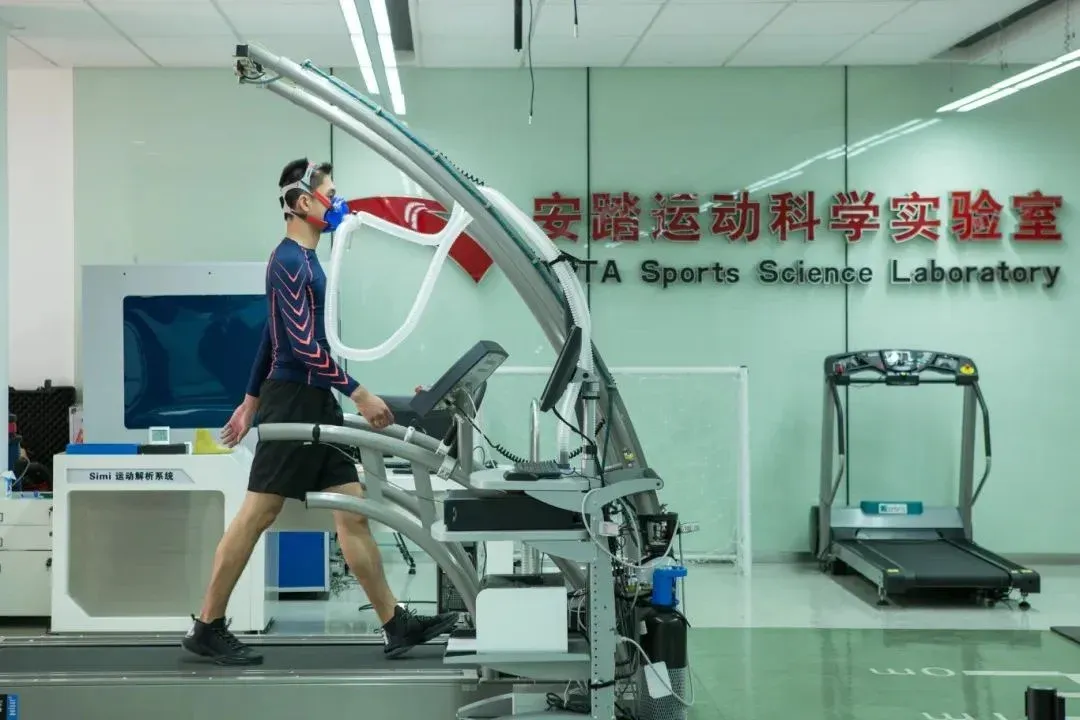
From ANTA’s sports-science research to joint development of new materials by research institutes and local companies, Quanzhou’s clothing and footwear industries are extending innovation into material properties, human movement research and functional product characteristics.
Quanzhou therefore provides a useful setting for the question: how can an established manufacturing industry open up new growth opportunities through continuous research and development?
The journey focuses on three central questions:
1. Why has such a closely interconnected textile, clothing and footwear cluster developed in Quanzhou?
2. How do traditional manufacturers use automation and digitalisation to improve efficiency while meeting the requirements of flexible production?
3. How do companies combine material innovation, product development and brand management to create greater value and enter international markets?
Day 1
Inside manufacturing: how traditional factories become more digital and intelligent
Morning | LILANZ
From cutting to the finished garment: understanding the reorganisation of clothing production
LILANZ is one of Quanzhou’s prominent menswear brands. Its smart manufacturing provides a concrete example of modernisation in clothing production.
Publicly available reports describe automated cutting, intelligent overhead conveyor systems connecting different floors and digital production management. Cut pieces and semi-finished products move between operations, production orders are assigned to the relevant workstations, and data are used to track progress.
Why visit?
This stop provides a production manager’s perspective on the relationship between equipment, processes, people and data.
Higher factory efficiency comes not only from more capable equipment, but also from reducing waiting time, transport, mismatches and rework.
Discussion topics
- How does the company decide which production operations to modernise first?
- How is production organisation adjusted to different styles and order sizes?
- How are the effects on lead times, quality and staffing assessed?
- Which lessons can be transferred to smaller suppliers?
Opportunities for German-Chinese cooperation
Discuss specific application conditions and investment economics for handling flexible materials, in-line quality inspection, production scheduling and upgrading existing production lines.
Afternoon | SEVEN
From production equipment to factory-wide coordination: how smart logistics supports flexible manufacturing
SEVEN’s Chinese Fashion Industrial Park is located in Yinglin, Jinjiang. Its smart-factory applications cover production, material supply and warehousing.
Publicly documented examples show automated guided vehicles transporting materials between warehouses and production areas, interfacing with lifts and roller doors. In production, information systems support cutting, matching sets of parts and changeovers between styles.
Why visit?
While the morning focuses on efficiency at individual process and workstation level, the afternoon examines how the whole factory works together.
The central question is:
How are materials, equipment and people coordinated at the right time when production tasks are constantly changing?
Discussion topics
- How does a wide product range affect material supply and production scheduling?
- How can automated logistics be integrated into existing buildings and management systems?
- How does the company respond to material shortages, urgent additional orders or equipment faults?
- How is the contribution of logistics modernisation to overall delivery performance measured?
Opportunities for German-Chinese cooperation
Exchange implementation experience in mobile robotics, warehouse management, systems integration and dynamic rescheduling during disruptions in complex manufacturing environments.
Day 2
Products and materials: how clothing and footwear gain new technological value
Morning | ANTA
From manufacturing capabilities to product development: understanding the growth of Chinese sports brands
ANTA offers a clear example of brand building and internationalisation among Quanzhou companies.
Its company museum in Jinjiang and sports-science research facilities demonstrate how sporting requirements are translated into product design, and how testing and materials development continuously improve performance. Public reports describe research into foot shapes and the collection and use of data on cushioning, grip and flexibility.
Why visit?
ANTA shifts the focus from “How is it manufactured?” to “Why is the product developed this way?”
The central issue is how manufacturing capabilities, R&D investment and an understanding of users’ needs combine to create brand value.
Suggested visit content
- Company museum and the brand’s development history;
- displays of innovative sports footwear, clothing and materials;
- sports-science testing facilities accessible by prior agreement;
- discussion of collaboration between development teams and the supply chain.
Discussion topics
- How do athletes’ and consumers’ requirements enter product development?
- How are material properties, product construction and wearing comfort tested together?
- Which challenges must be resolved between the laboratory and series production?
- How does internationalisation affect R&D organisation and supplier selection?
Opportunities for German-Chinese cooperation
Identify specific cooperation topics in sports biomechanics, testing equipment, functional materials, product simulation and joint R&D.
Afternoon | Fujian Haixia Graphene Industry Technology Research Institute
From the laboratory to production: how new materials enter traditional industries
The Fujian Haixia Graphene Industry Technology Research Institute is one of the important platforms supporting the development of Jinjiang’s new-materials industry.
Its work includes research into new clothing and footwear materials in cooperation with industrial companies. Membrane materials for clothing and footwear applications have already been jointly developed with local companies and transferred into series production.
Why visit?
This stop introduces another participant in Quanzhou’s innovation system: an industrial technology platform connecting scientific capabilities with specific manufacturing requirements.
For new materials to reach commercial use, several questions must be answered together:
- Are their properties stable and reproducible?
- Can they be integrated into existing manufacturing processes?
- Are series-production costs economically viable?
- Do customers recognise the additional product value?
Suggested visit content
- Research results and application examples for new materials;
- research and pilot facilities accessible by prior agreement;
- examples of joint development with local companies;
- approaches from sample validation through to industrialisation.
Discussion topics
- How do companies formulate technical requirements suitable for R&D projects?
- How are laboratory metrics translated into production acceptance criteria?
- How are contributions, intellectual property and the use of results agreed in joint development projects?
- How can the local value chain shorten validation cycles?
Opportunities for German-Chinese cooperation
Discuss needs-led cooperation on functional membrane materials, composites, testing and evaluation, and joint pilot trials.
Day 3
From niche markets to cooperation: how innovation creates business opportunities
Morning | HOTSUIT
From a specific niche need to differentiation through functional clothing
HOTSUIT is a sportswear brand owned by Shishi-based Junchi Technology. It addresses the market with products including sweat suits designed to increase perspiration during exercise. The company has laboratories for materials, pattern development and testing functional properties. Its international expansion includes cross-border e-commerce and overseas buyers.
Why visit?
After examining large-scale manufacturing, brand-led product development and research platforms, this stop turns to a more focused business approach:
How does a company organise materials, fit, product validation and sales channels around a clearly defined use case?
For German SMEs, the visit offers practical insights into innovation in Chinese niche markets.
Discussion topics
- How does the company identify niche needs worth long-term investment?
- How are the performance, durability and safe use of functional products tested?
- How is user feedback translated into material and design improvements?
- Which product and sales-channel adjustments are needed when entering international markets?
Opportunities for German-Chinese cooperation
Discuss small-scale cooperation initially focused on sample validation in functional textile materials, product testing, sustainable design and European sales channels.
Afternoon | German-Chinese Textile & Footwear Symposium and Matchmaking
From industry understanding to practical cooperation
After three days of exchange, participants should be better able to assess:
- Which production questions deserve deeper investigation?
- Which companies are suitable for joint development projects?
- Which materials, equipment or software solutions offer cooperation opportunities?
- Which market needs could both sides serve together?
We therefore organise a tailored closed-door technical symposium with prepared one-to-one matchmaking in Jinjiang or Shishi, based on the delegation’s profile. Specific participants and dates are confirmed in advance:
German-Chinese Innovation Symposium for Textiles, Clothing and Footwear
Technical dialogue on innovation and industrial cooperation
The recommended duration is around three hours. Expert contributions, the roundtable and individual meetings build on the preceding visits and both sides’ specific interests.
Part 1 | Industry insights: perspectives from industry and practice
Recommended duration: 45 minutes
Quanzhou companies share:
- How specialised supply chains support product development and rapid delivery;
- particularly effective digitalisation investments and implementation experience;
- how materials development translates into additional product benefits and higher value creation.
Contributions from German companies | Content to be determined
Topics will be tailored to the delegation’s final composition and main priorities. Possible areas include:
- Flexible manufacturing and automation integration;
- energy efficiency in dyeing and textile finishing, heat management and water recirculation;
- functional materials and product testing;
- European market requirements and supplier-selection criteria.
Part 2 | Roundtable: focusing on real challenges
Recommended duration: 45 minutes
Depending on the topics, invitees include clothing and footwear companies, materials suppliers, equipment and software providers, research institutions and energy-efficiency service providers.
Discussion topics:
- Which processes most urgently need improvement, and where do existing solutions reach their limits?
- Which quality, efficiency and cost requirements must new technologies meet?
- Can both sides provide samples, testing environments and technical contacts?
- How can a clearly defined pilot project with measurable results be designed?
Part 3 | One-to-one matchmaking: meetings arranged in advance
Recommended duration: 75 minutes
Before the event, we gather information on German companies’ technological capabilities, purchasing needs and cooperation interests, together with the specific challenges faced by Chinese companies. Suitable counterparts are then matched accordingly.
Examples:
- Automation providers meet factories needing solutions for handling flexible materials;
- energy-efficiency technology providers meet dyeing and finishing companies or industrial parks;
- materials companies meet brand R&D teams and fabric-development teams;
- testing institutes meet manufacturers of functional clothing and footwear;
- German brands or distribution partners meet suppliers with suitable development capabilities.
Part 4 | Next steps: agreeing on follow-up actions
Recommended duration: 15 minutes
For opportunities where both sides wish to continue, the following are recorded:
- The problem to be resolved;
- any further documents or samples required;
- the responsible contacts;
- the next technical discussion or planned tests.
Adapting the itinerary to your delegation’s interests
This programme is an example itinerary through Quanzhou’s textile, clothing and footwear ecosystem. Its central sequence is:
Manufacturing modernisation → product and material innovation → niche markets → cooperation matchmaking.
If the focus is energy efficiency and environmentally responsible production, one stop can be replaced by a visit to a dyeing and finishing company or a relevant industrial park. Discussion would then centre on steam supply, waste-heat recovery, water resources and process control.
For a stronger interest in supply chains and sourcing, discussions with fabric, accessory and footwear-material suppliers or visits to specialist trade markets can be added. The focus would be sampling, quality management, delivery capability and traceability.
If robotics and automation are the priority, joint discussions with equipment suppliers and user companies can be organised. Specific operations such as gripping, feeding, sewing, inspection and packaging provide the basis for discussing application conditions.
Together with local partners, Sino-Cooperation can select suitable counterparts and coordinate participation by company leaders and managers in production, R&D or engineering in advance.
The final selection of companies, access to production areas and laboratories, counterparts and visit sequence depend on the delegation’s interests and confirmed hosting arrangements. Each stop is designed around specific questions so participants take away insights for business decisions and further cooperation.
Preparation and cooperation beyond the journey
Technical preparation on both sides
Before departure, we clarify your strategic and technical questions and brief the host companies in detail. We ensure that your counterparts are business leaders or senior managers with a technical background; depending on the topic, production, quality and development managers are included. Specific participants and accessible areas are confirmed in advance.
Closed-door technical symposium and targeted individual meetings
The closed-door technical symposium and prepared one-to-one matchmaking connect the visits with specific cooperation questions. Potential partners are selected according to your requirements; industry associations, investors and researchers add further perspectives. Participants and dates are confirmed during programme planning.
Local support and your China radar
Our work does not end at the airport. The local team supports further technical and commercial coordination and works with you to advance promising cooperation opportunities and projects. A tailored monthly Executive Briefing keeps you informed about relevant industry segments, technology trends and cooperation opportunities. Tasks, responsibilities and topic priorities are defined within the project. Business agreements remain decisions of the companies involved and are not guaranteed.