China Industry Deep Dive is the travel brand and platform for German-Chinese industrial cooperation developed by Sino-Cooperation. The historical name Sino-Cooperation Platform is retained in this case study. The text describes observations from this journey and information from the original project materials, not universally applicable statements about Chinese companies. Company figures and reported effects were not independently verified for this version.
A field report on digital transformation: German expert Falko Kirsten on a Deep Dive mission in the Chinese market
Introduction: strategic perfectionism versus speed of implementation
In Germany, discussions about artificial intelligence (AI) and digital transformation often revolve around comprehensive strategic master plans, data security and change-management concerns. In China, by contrast, companies have long focused on agile implementation, rapid iteration and a measurable return on investment (ROI).
To analyse this dynamic first-hand, the Sino-Cooperation Platform accompanied experienced German digitalisation expert Falko Kirsten on an intensive seven-day study visit to the Chinese market from 5 to 11 March 2026.
The mission’s core objective: to discover how Chinese companies implement digitalisation and AI in real business scenarios beyond glossy presentations—and what complementary cooperation opportunities this creates for German SMEs and industry.
Direct discussions at shop-floor and management level, ranging from major industry players to agile AI software developers, revealed three key insights that offer German companies new perspectives for their own roadmaps.
Insight 1: moving away from over-engineering—agile transformation driven by practical problems
While German companies often tend to design comprehensive IT strategies before taking the first step, Chinese companies demonstrate the power of agility: start with a minimum viable product (MVP), move forward incrementally and solve specific problems.
-
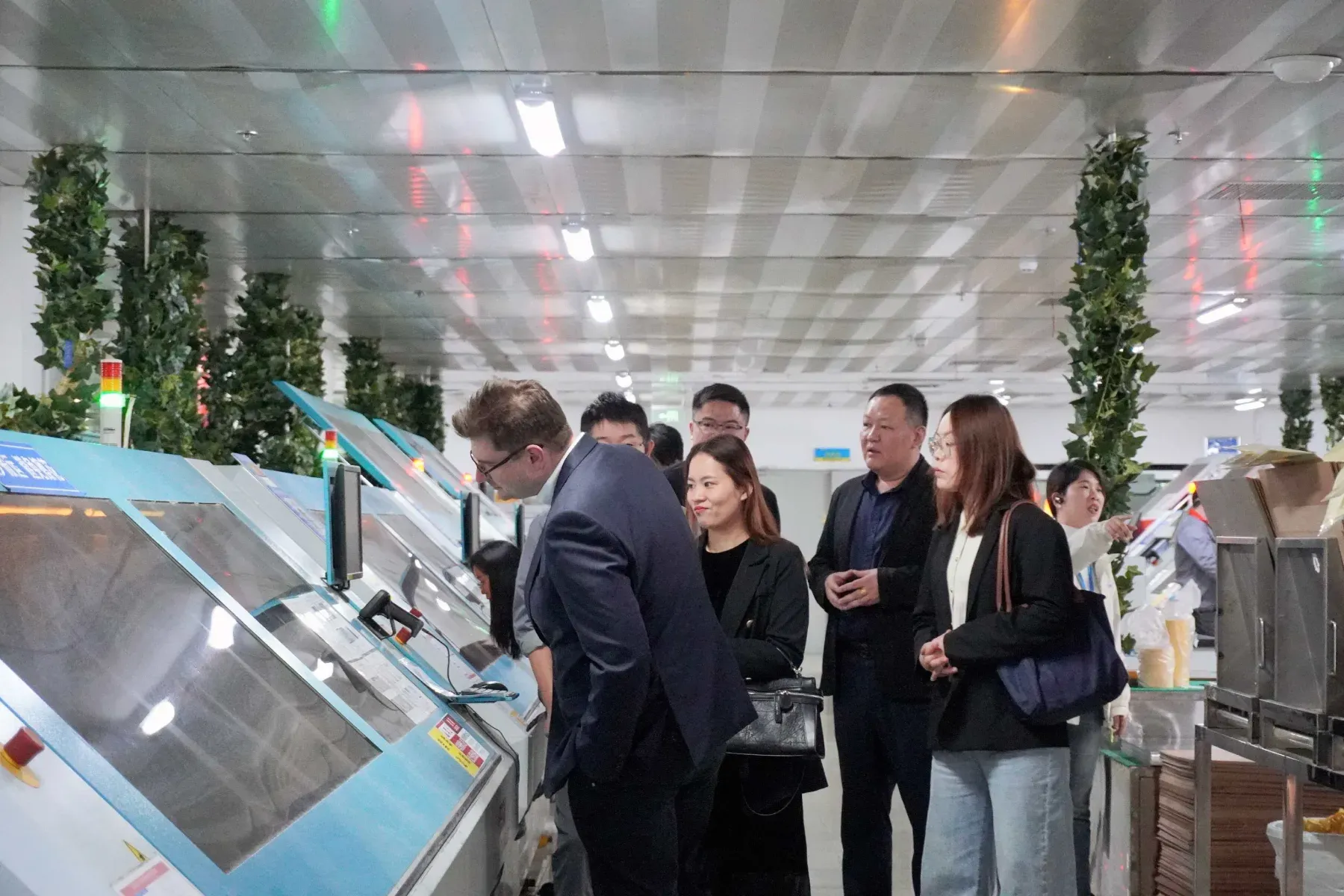
A pragmatic start (Jialichuang): At Jialichuang, a “one-stop industrial internet manufacturing platform” with 8.4 million users, we were surprised to learn that when its digitalisation department—now more than 600 people strong—started in 2015, there was no grand master plan. Digital systems were introduced iteratively, guided strictly by urgent production pain points. Today, the entire process from order placement to final packaging is fully transparent. Efficiency increased substantially, and every employee is now encouraged to integrate AI tools into daily work.
-
From internal tool to ecosystem (Sunwoda): This evolutionary model is also apparent at battery giant Sunwoda (Xinwangda). The hidden champion, whose batteries power around 30% of the world’s smartphones, has digitalised approximately 90% of its business processes since 2020; 80% of management decisions are data-driven. Even more striking is its ability to scale: Dianlian Technology, originally Sunwoda’s internal IT department, was successfully spun off. It is now an independent industrial internet platform serving more than 8,100 external companies—a prime example of a successful platform economy model.
Insight 2: democratising AI and achieving an impressive ROI
“How can artificial intelligence genuinely be integrated into business processes rather than remain a technology showcase?” Mr Kirsten discussed this central question in depth with the team at Ruiruan Technology, a provider of AI agents for business owners.
The Jianlibao Group provided a concrete example. The following information comes from the original project materials; baselines, periods and calculation methods require separate verification. Since digital transformation began in 2022, with investment of around RMB 20 million (approximately EUR 2.5 million), the following improvements were reported for the company:
-
30% reduction in personnel costs
-
5% reduction in logistics costs (Note: with annual logistics costs of RMB 200 million, a targeted digital investment of only about RMB 1 million reportedly generated annual savings of around RMB 10 million—an outstanding ROI.)
-
3% reduction in energy consumption (water, electricity and gas)
The key to change management: What impressed us most was not the technology itself, but the company culture. Previously, IT systems were imposed from the top down. Today, Jianlibao runs internal AI competitions and financially rewards front-line employees who successfully use AI technologies to improve their own workflows. This bottom-up approach offers indications of how acceptance and operational efficiency might be improved. It is a particularly interesting approach for German companies that often face employee reservations.
Insight 3: robotics and hardware—from technology push to market pull
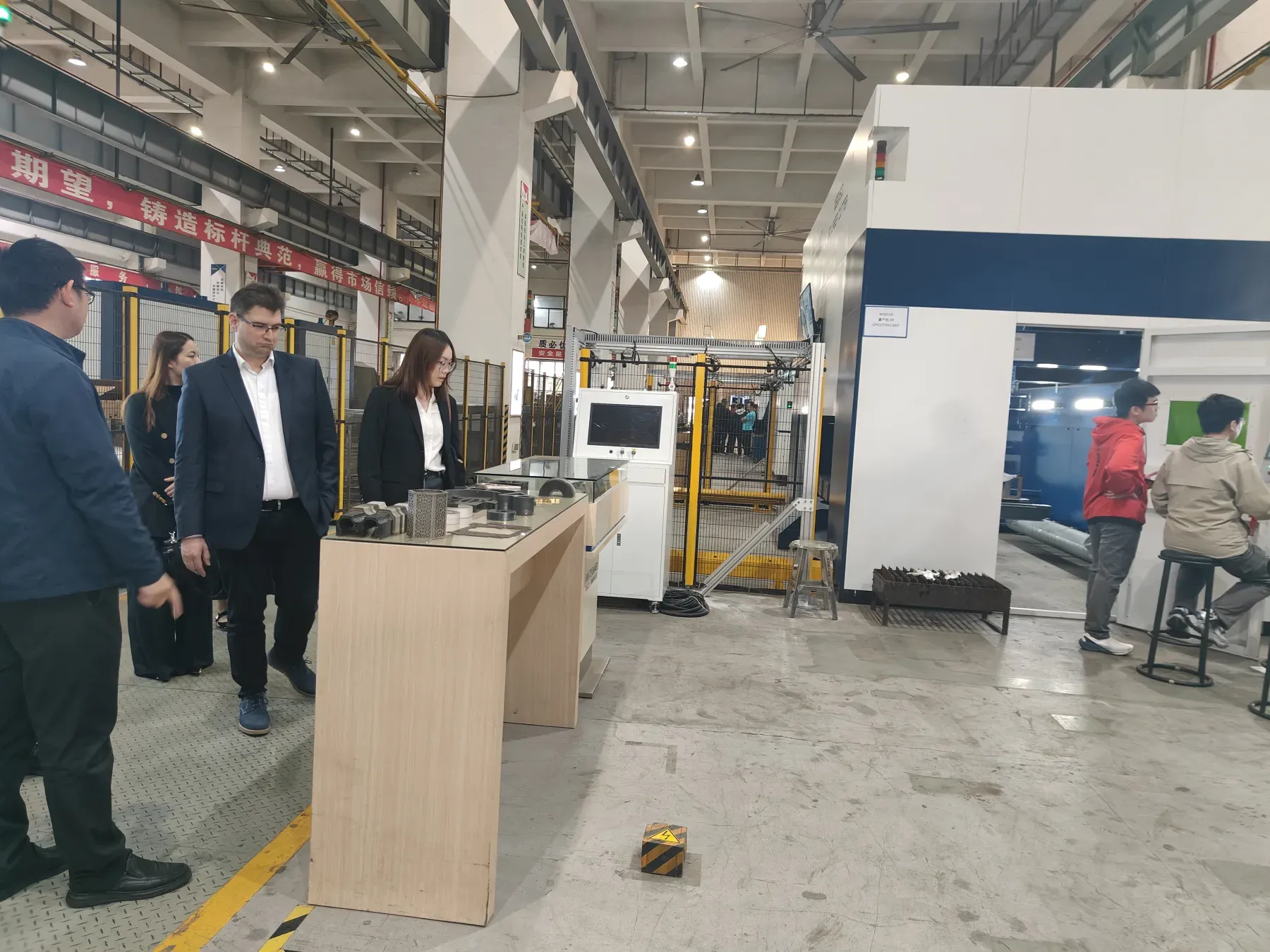
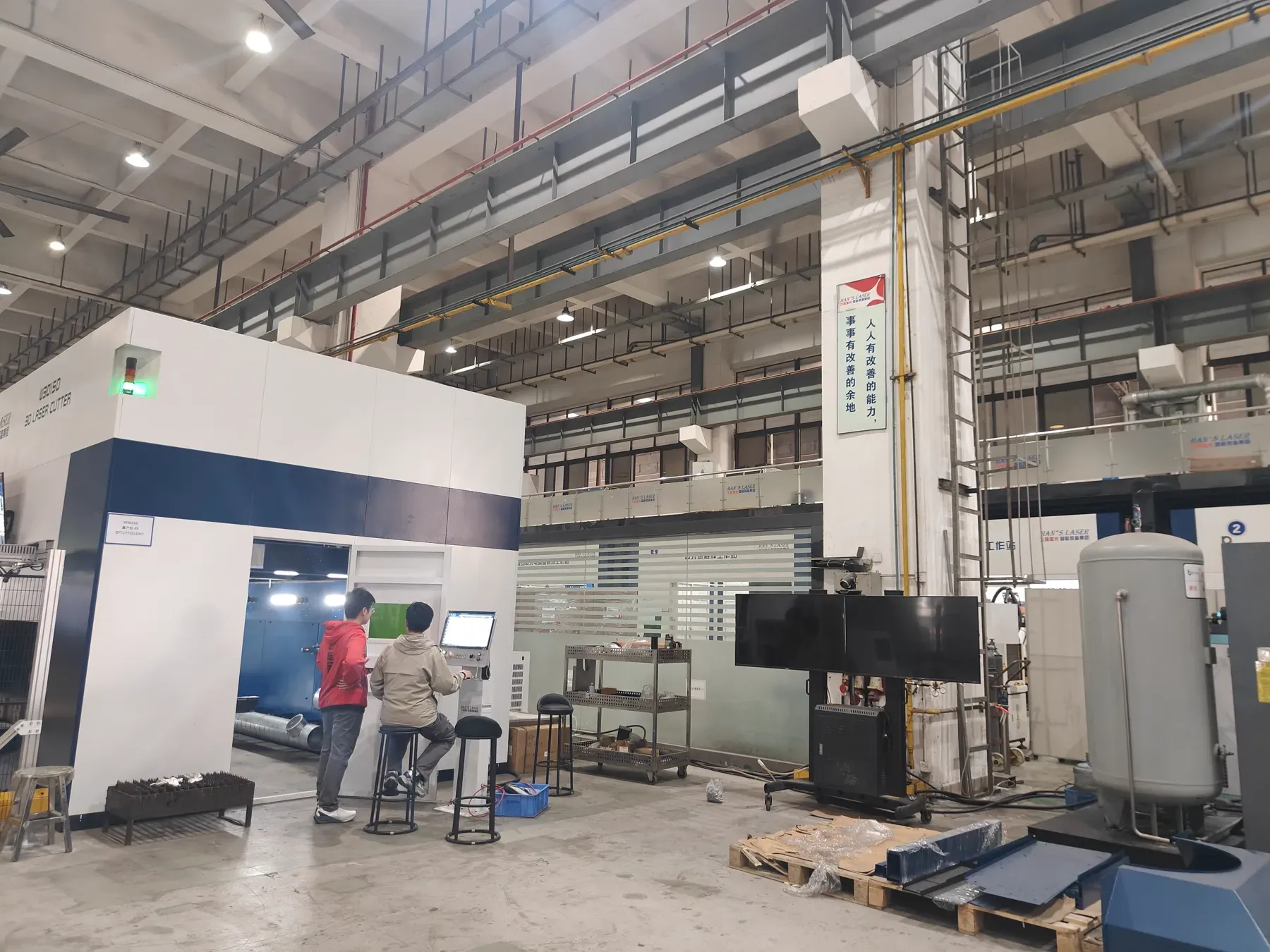
During our visit to Han’s Laser, one of the world’s largest manufacturers of industrial laser systems, with more than 160 subsidiaries spanning the value chain from 3D printing to robotics, we experienced the sheer scaling capability of China’s smart-manufacturing industry.
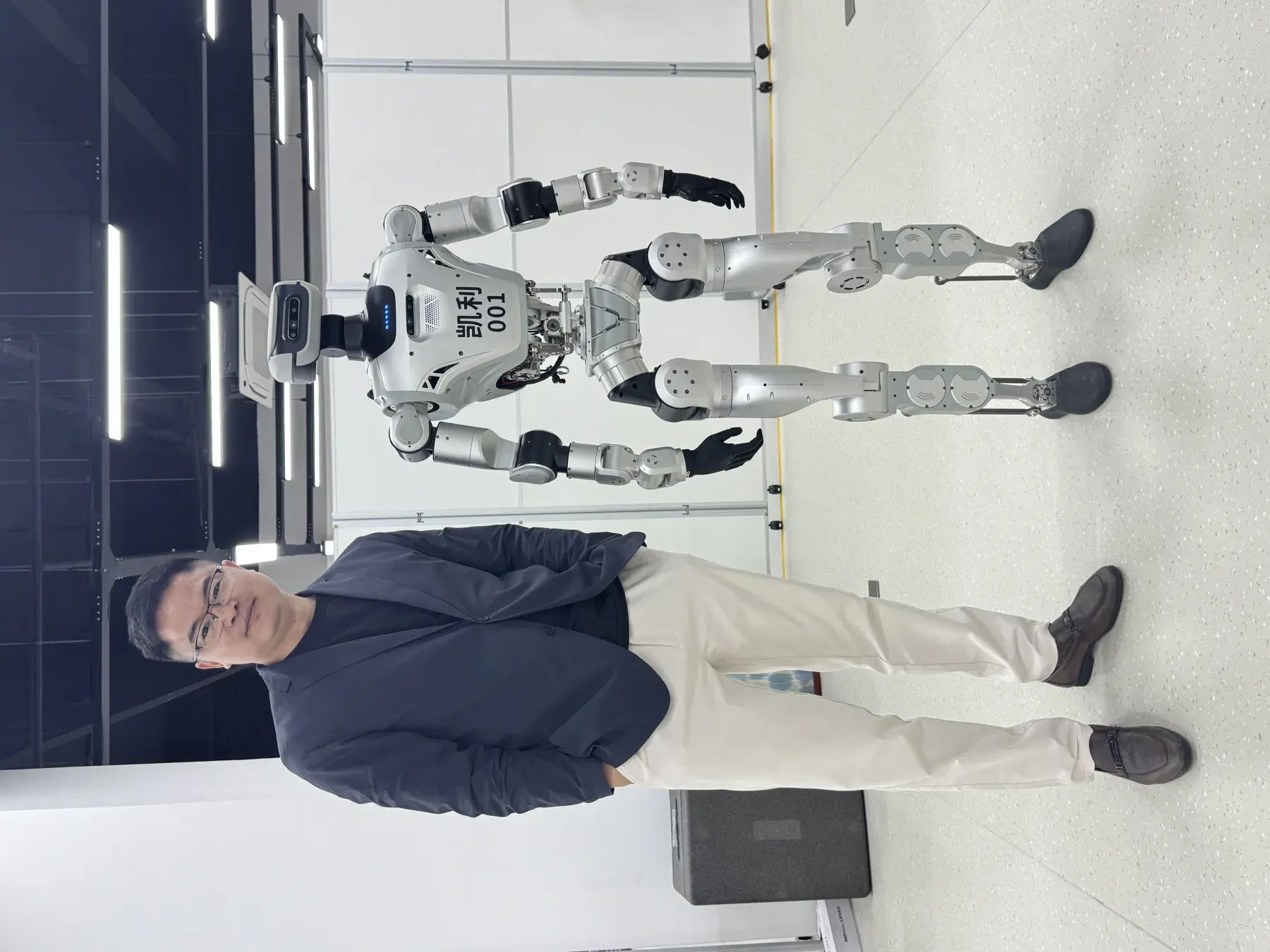
Discussions with the Foshan branch of rising German robotics company Neura Robotics and Chinese robot manufacturer Kelly Robotics revealed a significant shift in approach.
In the past, hardware companies often followed the principle of technology push: “We have outstanding technology—where is the problem it solves?” These discussions showed a stronger focus on market pull, meaning specific application scenarios.
Companies are no longer blindly pursuing extreme values for individual technical parameters, thereby avoiding over-engineering. Instead, they focus on the sweet spot: how can reliability, implementation speed (time to market), user experience and total cost of ownership (TCO) be balanced optimally in a specific industrial application?
Conclusion and outlook: China as a global real-world testing ground
The seven-day journey gave Mr Kirsten and our team concrete insights into the pragmatic implementation of digitalisation and AI at the companies visited. These observations are not a universal assessment of the Chinese economy as a whole.
From the Sino-Cooperation Platform’s perspective, they point to potentially complementary strengths: German companies have deep domain expertise and rigorous engineering logic. Chinese companies stand out for agile implementation, diverse use cases and exceptionally fast iteration.
The complementarity between Germany and China in digital transformation has never felt more tangible. Whether integrating mature Chinese AI-agent solutions into German processes or learning agile transformation methods, the Chinese market offers valuable ideas for German decision-makers that are best experienced on site.
Would you like to experience the digital reality in China beyond the headlines? Under the China Industry Deep Dive brand, Sino-Cooperation organises tailored industrial and technical journeys for executives who want to see real use cases and build strategic partnerships. Get in touch.