Chongqing Automotive: Software, Factories and Lightweighting as One System
How a long-established vehicle and machinery hub connects electric vehicles, automotive software, flexible production, and aluminium and magnesium capabilities—and which questions international companies can test there with evidence.
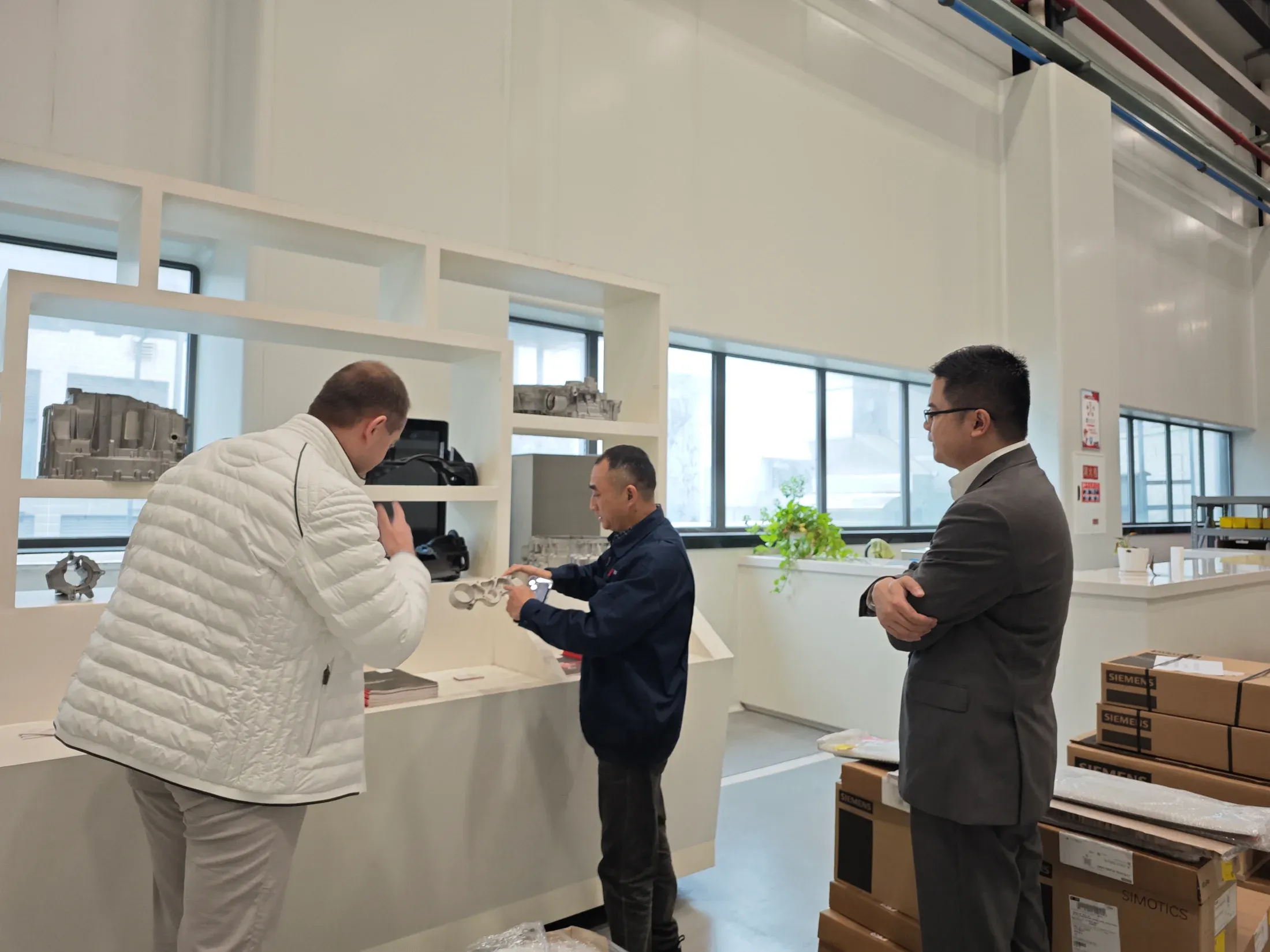
Documented industrial visit in Chongqing, November 2025. The image evidences previous field work; it is not a commitment by this facility to receive future groups.
What can be investigated in this production system
Chongqing combines a broad industrial base with a rapidly expanding vehicle ecosystem. Official sources report almost 2.79 million vehicles produced in 2025, including about 1.30 million new energy vehicles. At the same time, established capabilities in powertrain engineering, casting, machining and materials remain visible across the city.Sources [1], [2], [3]
The relevant story is therefore not only the number of new electric vehicles. The system can be used to investigate how product variety and shorter cycles reshape factories, how software and testing move deeper into the value chain, and how aluminium, magnesium and large-format casting create new requirements for design, process control and quality.Sources [4], [5], [6], [7], [8], [9]
Chongqing’s learning value lies not in a single showcase factory, but in how mechanical production, software, process data and lightweight materials are being realigned across one industrial system.
Orders of magnitude—and their limits
The figures describe regional scale. They do not establish which factory is relevant or accessible for a specific question.
RMB 3.38tn2025 gross domestic product
Official total for the Chongqing municipality; not a measure of revenue generated by the industries discussed here.
The learning value comes from the relationships between material, process, quality, data and market—not from a list of famous brands.
From mechanical vehicle production to a software-hardware ecosystem
Alongside body, chassis and powertrain, operating systems, driver-assistance functions, control units, power electronics and standardised testing are gaining weight. Official company counts indicate density, not the maturity of every supplier.
From high automation to flexible, measurable factory performance
Manufacturers describe connected equipment, robotics, digital material flow and inline inspection. A meaningful assessment still requires testing cycle time, changeovers, downtime, rework, scrap and OEE in the specific process.
From selling materials to joint lightweight development
Aluminium and magnesium capabilities become industrially relevant only when alloy, component design, forming, casting, joining, testing and series readiness are considered together. Public sources support applications and pilot infrastructure, not suitability for every component.
From export product to auditable data and compliance systems
Battery-passport and CBAM rules make product, material and emissions data more important in parts of the European value chain. The exact exposure depends on the product, customs code, market role and applicable legal text.
Questions worth investigating in depth
These questions are derived from the evidenced structures. What can be observed on site is verified only during project scoping.
How does a factory combine product variety with stable cycle time and quality?
Chongqing’s newer vehicle plants provide a concrete setting in which order control, material flow, changeover, inline inspection and disruption management can be considered together—if the host releases the relevant process for discussion.
When does large-format casting improve the total system—and when does it shift risk elsewhere?
Publicly documented use of large-format casting makes questions about tooling, process windows, scrap, repair, metrology and supply-chain risk especially relevant.
How do aluminium and magnesium move from material promise to validated component?
Material producers, machinery companies and research platforms represent different stages of the same development question: specification, processing, joining, testing and industrialisation.
Which software and evidence layers become bottlenecks for Europe?
A growing automotive-software ecosystem and new European data obligations make it possible to examine development tools, test coverage, traceability and regulatory data handovers as one connected task.
Observable processes rather than company logos
The available project material illustrates possible levels of observation. It does not document a general commitment by the facilities shown to receive visitors.
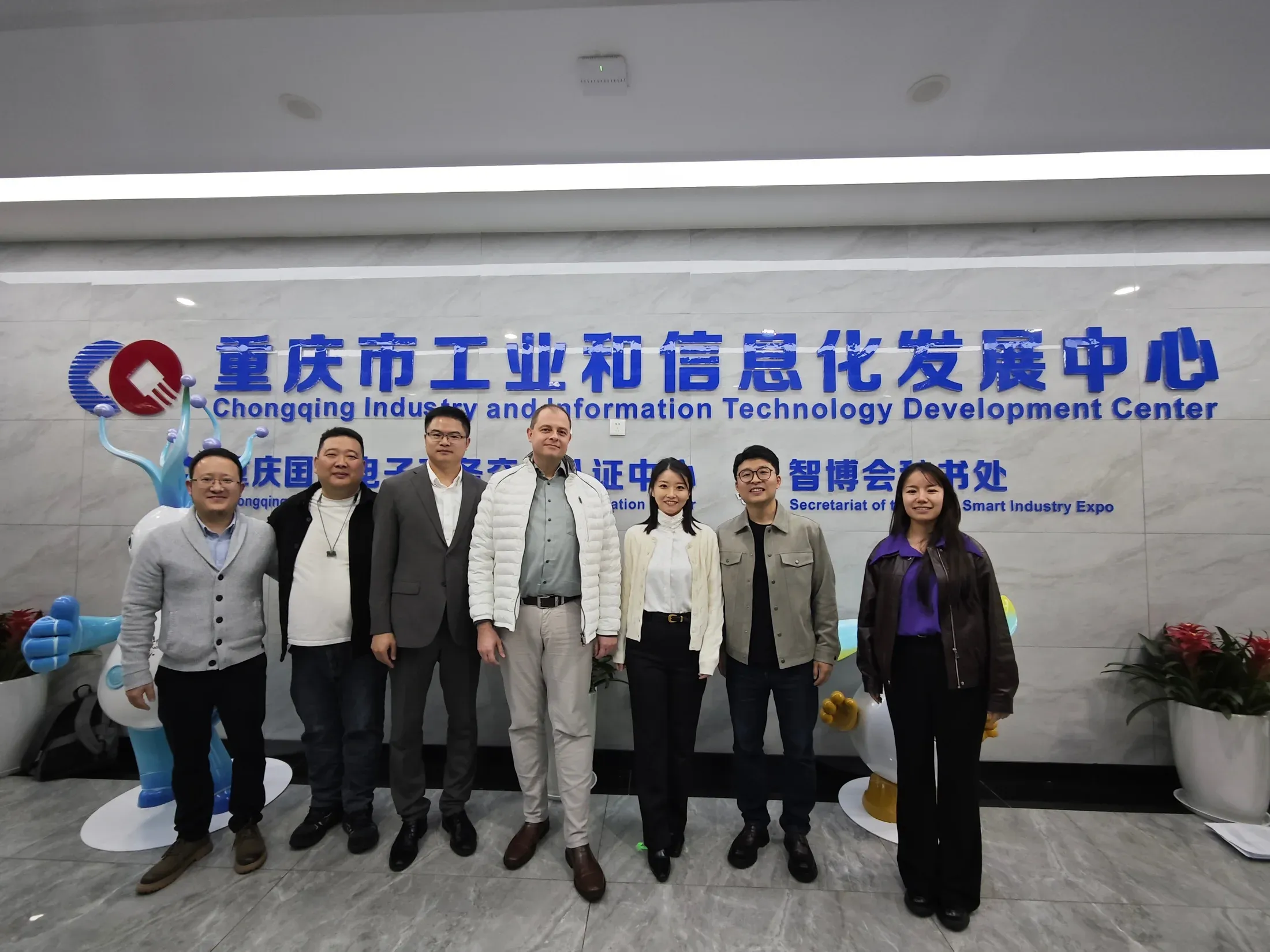
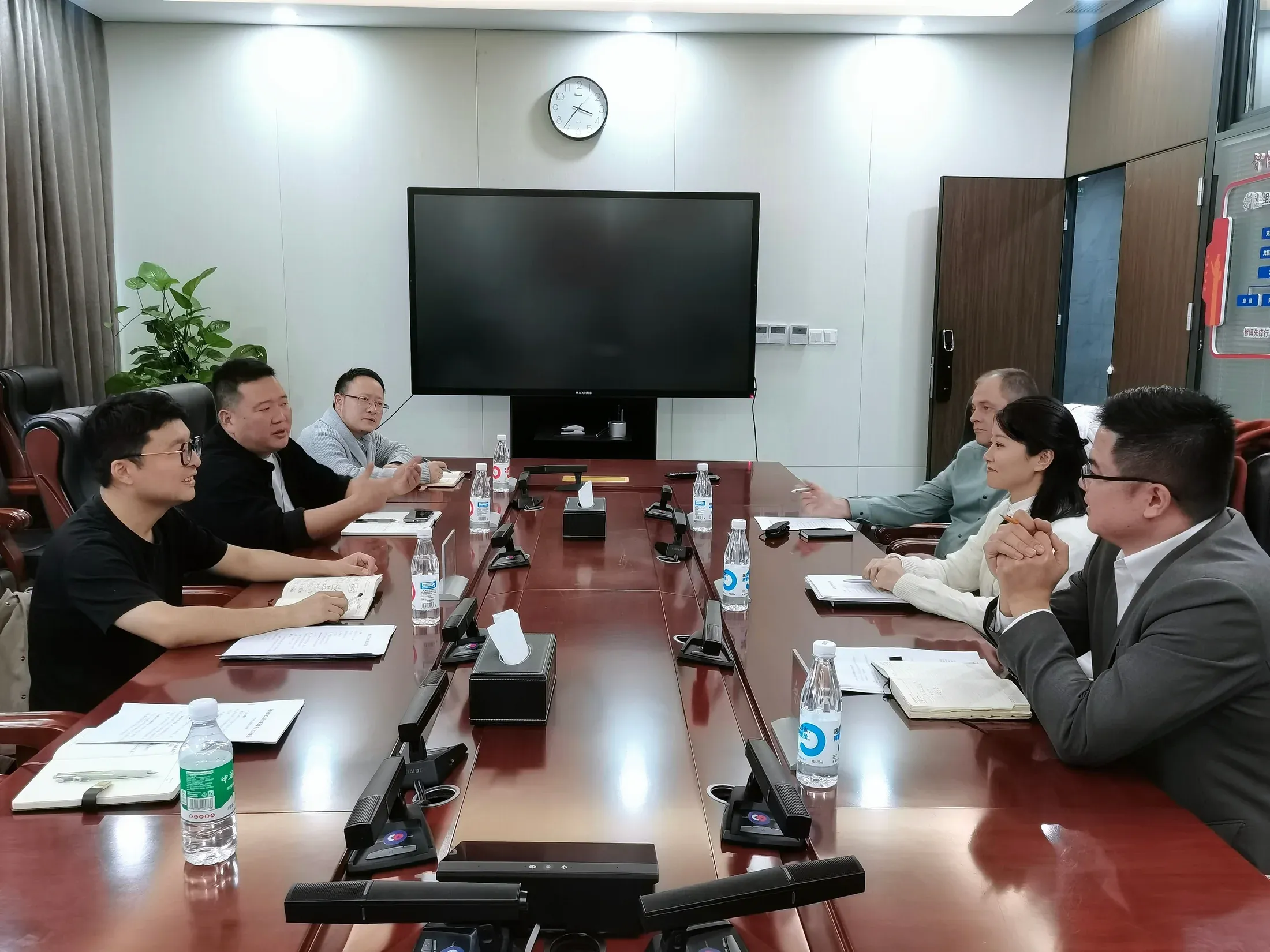
Exchange at the Chongqing Industry and Information Technology Development Center, November 2025. The image documents an earlier meeting, not the line-up of a future programme.Working discussion in Chongqing, November 2025. This illustrates the intended depth of exchange; counterparts are selected separately for each project.
Read the ecosystem through industrial roles
The roles help select conversations by function—from materials to market and data.
Vehicle platform and system integration
OEMs and platform teams connect vehicle architecture, suppliers, software releases and manufacturing approval. They are the starting point for questions that span multiple disciplines.
Software, testing and vehicle infrastructure
Automotive software, chips, test platforms and connected infrastructure form a value layer of their own. Their quality becomes visible in verification, release and operation—not in company counts alone.
Powertrain, casting, machining and production equipment
The established motorcycle, powertrain and supplier base may provide a bridge into e-drive components, structural parts and demanding manufacturing tasks; which capabilities transfer must be tested at company level.
Aluminium, magnesium and technology transfer
Industrial aluminium processing and magnesium research infrastructure connect material development with automotive, motorcycle and equipment applications. The research site and pilot plant are not necessarily co-located.
One city theme becomes testable learning nodes
“Intelligent EVs, Advanced Equipment and Lightweight Materials in Chongqing” is still too broad for a specific journey. It is therefore translated into tighter industrial areas and clearly bounded learning questions.
Liangjiang–Yubei/Jiangbei: Vehicle Platforms, Software and Flexible Manufacturing
A functional area still to be bounded precisely, combining vehicle development, software, system suppliers and digital production. Named companies currently serve only as reference points for further selection.
How are customer order, software release, component supply and variant control synchronised in one production system?
Next validation step: Verify the sub-area and observable processes
Shapingba: Large Castings, Quality Loops and Vehicle Assembly
Production and supplier functions around a publicly documented vehicle plant; plant boundary, relevant suppliers and observable processes require separate confirmation.
How do integrated structural parts change tooling strategy, process control, metrology, repair and risk across the plant?
Next validation step: Verify the sub-area and observable processes
Jiulongpo–Banan: Aluminium, Powertrain Technology and Precision Series Processes
A corridor linking aluminium processing, established powertrain and motorcycle production, and casting and machining processes. Travel times and functional links are checked before a specific route is proposed.
Which existing equipment and process capabilities can transfer into e-drive, structural components and new quality requirements?
Next validation step: Verify the sub-area and observable processes
University–Wansheng: Magnesium from Laboratory to Pilot Production
A distributed research and industrialisation network with university laboratories and pilot or demonstration facilities at different locations; it is not a compact park.
Which tests, data and partners does a magnesium component require between alloy development and robust series production?
Next validation step: Verify the sub-area and observable processes
How this could become a three-day Deep Dive
This is a learning logic, not a confirmed itinerary. Hosts, access and travel times are defined only after the participant profile and direct coordination.
The route is a modular learning concept, not a confirmed visit schedule. Only roles relevant to the participant profile and decision question are selected; each company, counterpart, production area and date requires separate approval.
Day 1
Software-defined vehicles and flexible factories
Frame the automotive ecosystem, then examine order control, material flow, variant changeovers, inline quality and the connection between product and production software.
Day 2
Lightweight materials, casting and transferable manufacturing capability
Connect an aluminium or magnesium application with casting, machining, joining and testing, and examine how an established machinery company enters new vehicle markets.
Day 3
Technology transfer and targeted cooperation discussions
Work from laboratory or pilot scale towards series production, then test the hypotheses developed during the first two days with relevant companies, research roles and industry actors in a closed working session.
Potential cooperation fields—as hypotheses
Automotive software, verification and release
Potential fields include functional safety, automated testing, simulation, hardware-in-the-loop, software configuration management and traceable release processes for Europe.
What must be clarified before a recommendation: Vehicle function, development stage, existing toolchain, target standard, test coverage, data access and responsible organisation.
Large castings, metrology and stable series processes
Potential fields include casting simulation, tool and temperature control, non-destructive testing, industrial computed tomography, dimensional inspection, root-cause analysis and preventive maintenance.
What must be clarified before a recommendation: Component geometry and material, actual defect patterns, cycle time, scrap, rework, measurement strategy, investment envelope and economic target.
Joint development of aluminium and magnesium components
A joint project could connect material selection, component design, forming or casting, joining, corrosion protection and test planning before the prototype stage.
What must be clarified before a recommendation: Specific component, load profile, target weight, volume, current process, approval requirements, cost ceiling and quality evidence.
Product, battery and carbon data for Europe
Potential fields include material traceability, battery data, product and process footprints, and structured evidence handover to European customers and importers.
What must be clarified before a recommendation: Product and customs code, value-chain role, target market, applicable legal act, existing data sources, supplier coverage and verification requirement.
What this page deliberately does not promise
Official production and company figures describe Chongqing at municipality level. Definitions, minimum sizes and possible overlaps are not fully disclosed in every source.
A publicly documented plant, laboratory or company is a research anchor, not a commitment to host visitors. Access to production floors, operating data, laboratories, executives or specific departments requires separate confirmation.
The proposed nodes are potential areas for deeper investigation. Boundaries, travel times, industrial relationships and observable processes are validated before a client-specific route is designed.
Company statements on automation, quality and traceability describe the published account of the respective company; they are not independent performance tests and cannot be generalised to the cluster.
EU requirements such as the battery passport and CBAM depend on the specific product and applicable law. This page is not a substitute for legal or customs classification advice.
Sources and methodology: verifiable, not name-heavy.
Figures and market statements are traced to the linked primary or institutional sources. Last checked: 12 Sept 2026.
Share the segment, participant profile and decision to be supported. We will narrow the relevant learning node for Intelligent EVs, Advanced Equipment and Lightweight Materials before verifying possible counterparts and access.