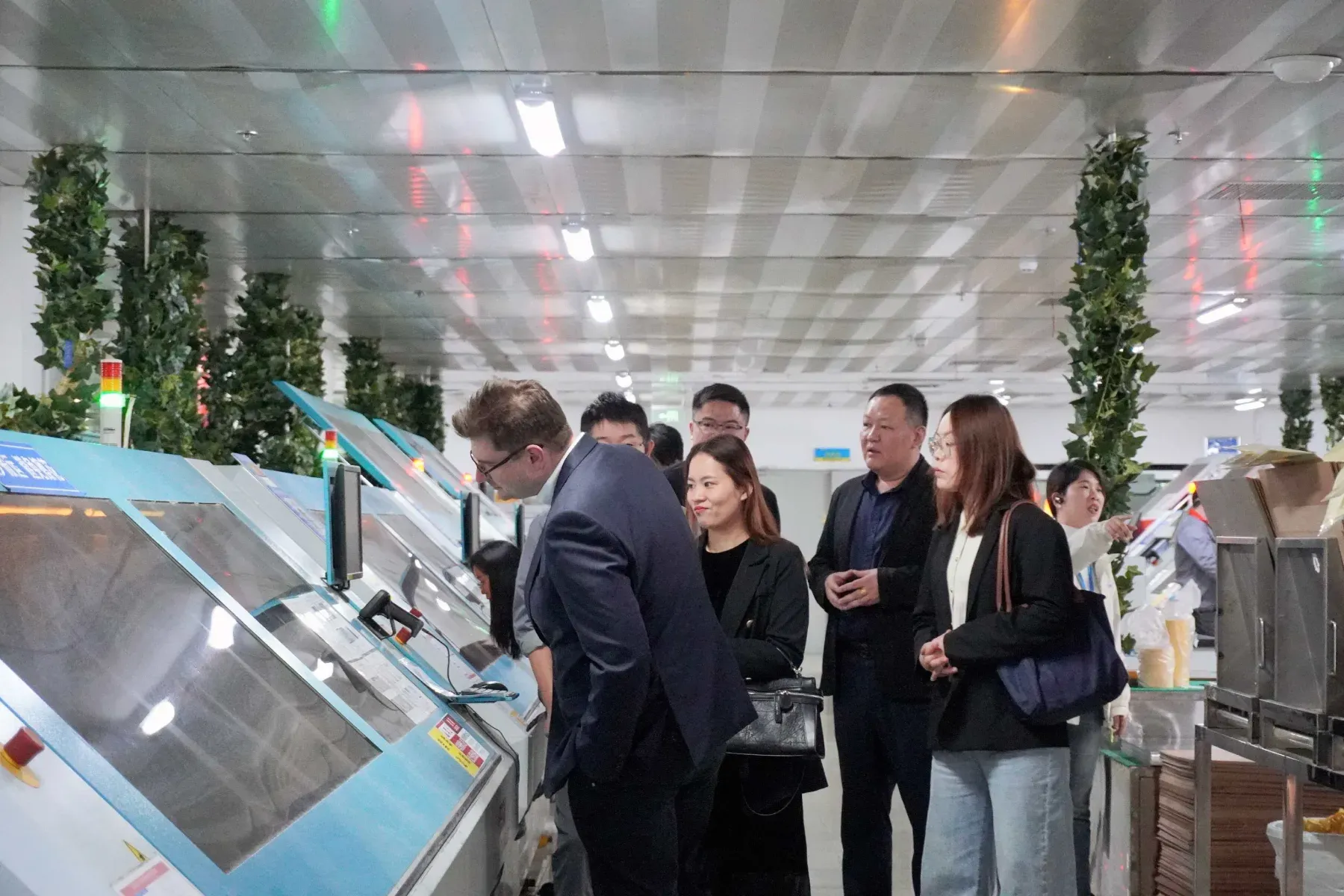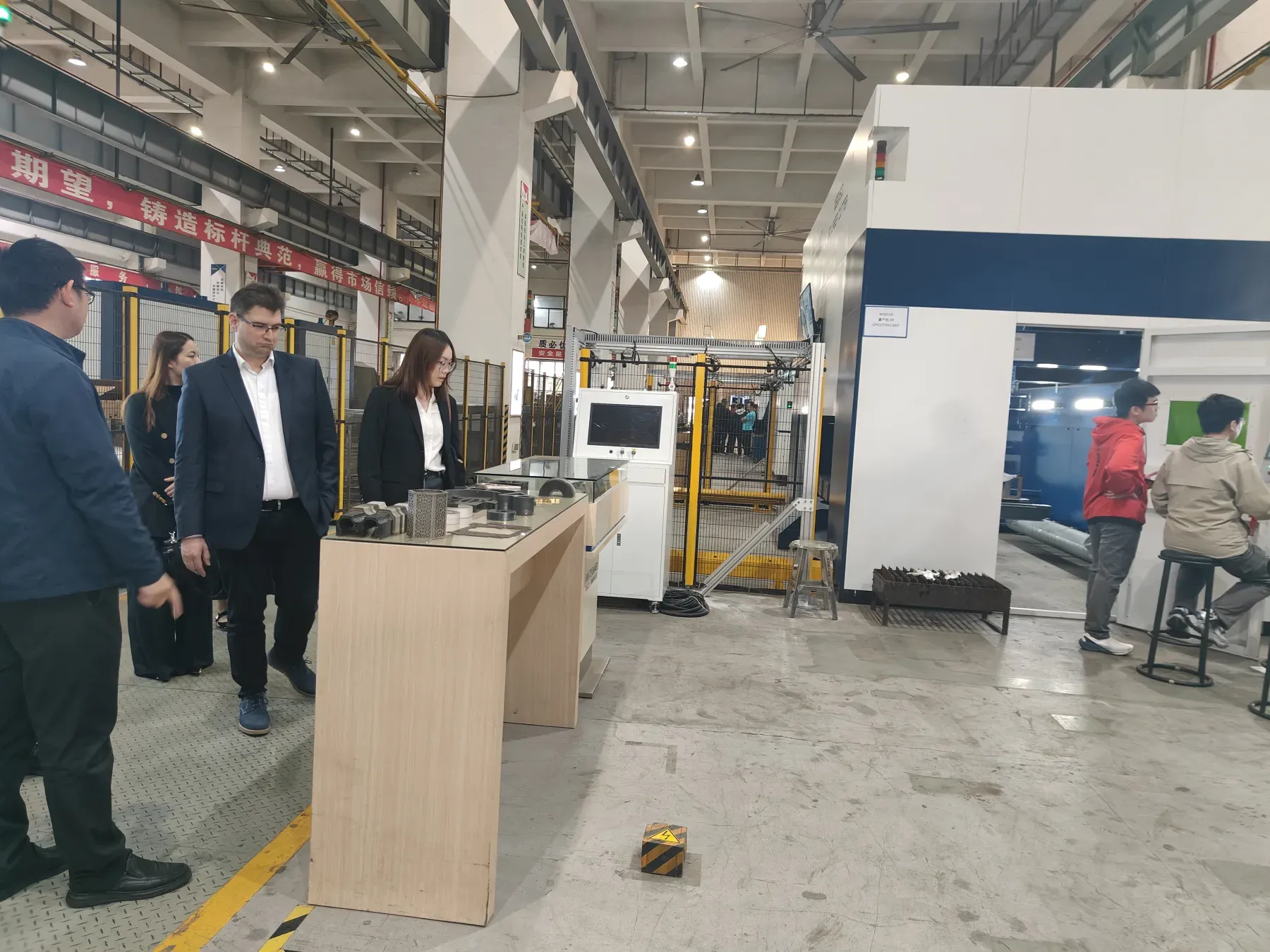
China Industry Deep Dive is Sino-Cooperation’s brand for industrial and technical visits and a platform for cooperation between German and Chinese industry participants. Led by Wei Zhang and Yijun Yu, the core team connects the network and operational infrastructure in China with the sector expertise of experienced partners in Germany and China.
Shenzhen: understanding why the next generation of robotics is emerging here
This delegation visit explains how Shenzhen connects AI, hardware supply chains, robot platforms, key components, practical applications and industry-focused capital to create a closely connected ecosystem for embodied artificial intelligence (Embodied AI).
Core strength: a comprehensive, closely connected supply chain
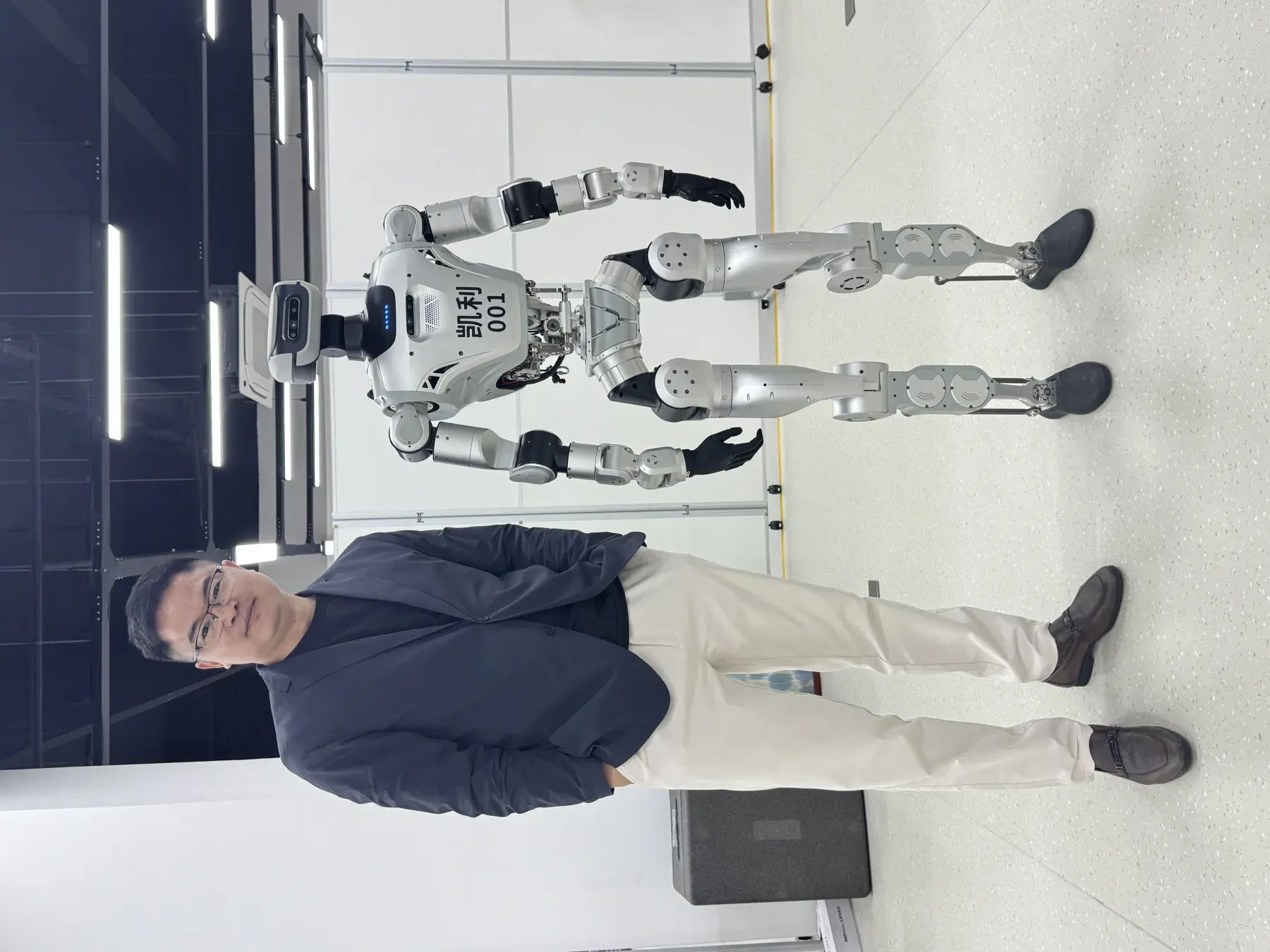
Shenzhen has developed an interconnected industrial ecosystem covering every part of robotics: from high-level AI systems and motion control to data collection, joint modules, dexterous robot hands and complete robot manufacturing. At leading humanoid robot manufacturers, more than 90% of components are made in China.
Leading companies such as UBTECH, DOBOT and RoboSense have established themselves in “Robot Valley”, between the southern foothills of the Yangtai Mountains and the Tanglang Mountains. Nearly 20 universities, research institutions and companies form an innovation consortium, while more than 100 suppliers collaborate through specialised roles.
Hardware and algorithms: development approaches and questions to examine
Shenzhen’s strengths extend well beyond hardware. At the World Robot Conference 2026, Shenzhen-based EngineAI introduced its brain-inspired Embodied AI engine, “EngineAI Awaken”. X Square Robot presented WALL-B, an Embodied AI foundation model based on a unified world-model architecture.
The source text describes AI² Robotics’ AlphaBrain as a system of large Embodied AI models spanning three development generations: end-to-end VLA, enhanced VLA and brain-inspired VLA. VLA stands for Vision-Language-Action: connecting visual perception, language and action.
Superdimensional Power has positioned itself as a large Embodied AI model company since its founding. Its SMASH algorithm is already deployed on different robot platforms, including the Unitree G1 and AGIBOT Expedition A3.
Shenzhen is thus seeing a growing group of Embodied AI unicorns valued in the tens of billions of renminbi.
The product developments and figures cited come from the underlying programme text and were not independently verified for this version. Development status, deployment conditions and industrial maturity need to be assessed separately in technical discussions.
The purpose of this journey is not to see as many robots as possible, but to answer three central questions:
1. Why can Shenzhen turn robot concepts into marketable products so quickly?
2. How do Chinese robotics companies shorten development cycles through strong supply chains and engineering capabilities?
3. How will Embodied AI move from demonstrations to real commercial deployment?
Day 1
An overview of Shenzhen’s robotics ecosystem: from industry networks to technological foundations
Morning
Shenzhen Robotics Association — SRA
Role in the industrial ecosystem
The Shenzhen Robotics Association was founded in 2009 at the initiative of the Shenzhen Institutes of Advanced Technology of the Chinese Academy of Sciences. It is an important networking platform for Shenzhen’s robotics industry.
The association connects companies in industrial, service, medical and specialised robotics, as well as artificial intelligence, with participants across the upstream and downstream value chain. Its ecosystem currently covers more than 800 companies.
Discussion topics:
- The development path of Shenzhen’s robotics industry;
- the shift from industrial robotics towards Embodied AI;
- future opportunities for German-Chinese cooperation in robotics.
Afternoon
Shenzhen Artificial Intelligence Industry Association — SAIIA
An entry point into the AI ecosystem: understanding the “brain” behind robotics
The Shenzhen Artificial Intelligence Industry Association was established in 2017 and is one of China’s early AI industry organisations.
Unlike the robotics association, SAIIA primarily connects the AI ecosystem behind robotics. This includes:
- Large AI models;
- computer vision;
- semiconductor chips;
- sensors;
- smart devices;
- autonomous driving;
- Embodied AI.
Why visit?
Future competition in robotics will be determined not only by mechanical design, but by the combination of:
AI models + data + perception + algorithms + hardware.
This visit helps German companies understand why Shenzhen’s strength in robotics rests on both its manufacturing capabilities and its AI ecosystem.
Second stop: Starfield
From an individual robot to a general-purpose intelligent platform
Founded in 2024, Starfield focuses on developing Embodied AI robotics. The company explores how a unified intelligent system can enable different robot types to perceive and understand their surroundings and perform complex tasks.
While traditional robotics companies often focus on an individual robot product, Starfield follows the approach of “one brain—many robot bodies”.
The “Starfield Brain” serves as a shared intelligent control system for different robot forms: wheeled dual-arm mobile robots, quadrupeds and humanoid robots. The aim is to transfer learned capabilities between different application scenarios.
Why visit?
Starfield represents a pragmatic development path. Rather than moving directly into demanding industrial applications, the company follows a step-by-step approach:
Testing in controllable commercial environments
→ Building capabilities and optimising models
→ Transferring capabilities to more complex tasks
→ Deployment in industrial applications
This approach provides useful insights into possible routes towards the commercialisation of robotics.
Day 2
A deeper understanding of Embodied AI: robot platforms, Physical AI and key technologies
Morning
UBTECH
A leading pioneer in the commercial industrial deployment of humanoid robots
Founded in 2012, UBTECH is one of China’s most influential humanoid robotics companies.
Its significance lies not only in developing the Walker humanoid robot series, but also in its long-standing work to integrate robots into real industrial environments, including automotive production, smart manufacturing and logistics.
Discussion topics:
- Development paths for industrial deployment of humanoid robots;
- selecting suitable commercial applications;
- challenges on the path from demonstration to series production.
Alternatively:
AGIBOT
A representative of China’s full-stack approach to Embodied AI
Afternoon
PaXini
A key to Physical AI: how robots actually perceive the physical world
PaXini focuses on tactile perception, dexterous robot hands and interaction technologies for Embodied AI.
Its central contribution is not manufacturing complete robots, but addressing a crucial question for the future:
How can robots understand the real world through sensory perception and perform complex manipulation tasks?
Why visit?
Participants gain deeper insight into:
- the importance of tactile sensing;
- how data are generated and collected;
- how perception, AI models and robotics interact in a closed feedback loop.
AIR Design House
From components to complete systems: understanding collaboration across the robotics value chain
AIR Design House is not a conventional robotics showroom. It is a platform for robot development, component selection, technical validation and industrial networking.
Its scope covers:
- Key components;
- algorithms;
- complete robot systems;
- application scenarios.
Why visit?
China’s robotics competitiveness stems from a comprehensive supply-chain ecosystem, not just individual companies.
This visit provides a suitable setting to discuss:
- China’s robotics supply chain;
- opportunities for European companies to participate in the Chinese ecosystem;
- potential cooperation in components.
Day 3
From robot technology to real applications and industrial cooperation
Guiding question: how do future technologies become viable business models?
Morning
Shenzhen Institute of Artificial Intelligence and Robotics for Society — AIRS
From frontier research to technology transfer: understanding another side of China’s robotics innovation system
The Shenzhen Institute of Artificial Intelligence and Robotics for Society (AIRS) was established in 2019. It is one of the ten municipal basic-research institutions established by the Shenzhen government and draws on the Chinese University of Hong Kong, Shenzhen.
Whereas companies primarily focus on product development and commercialisation, AIRS concentrates on theoretical foundations, key technologies and original research in artificial intelligence and robotics. It also investigates how research findings can be translated into practical applications in medicine, manufacturing and urban services.
Its research includes machine learning, computer vision, intelligent robotics, swarm intelligence, intelligent computing and industrial AI applications. Cooperation with universities, research institutions and companies supports transfer into practice.
Why visit?
The development of China’s robotics industry rests not only on competition between companies, but on a collaborative innovation model: government support + university research + business applications + technology transfer.
Discussion topics
How does Shenzhen support the transfer of research findings into industrial practice?
The focus is Shenzhen’s distinctive innovation model: government initiatives, university research support, business demand and transfer into industry.
Afternoon
German-Chinese Robotics Symposium & Matchmaking
From industry understanding to practical cooperation
Traditional delegation visits often end in the same way:
Factory visit → group photograph → departure from China.
For participants, however, the most relevant questions often arise only after the visit:
- Which Chinese companies merit further discussion?
- Which technology fields offer cooperation potential?
- Which suppliers would make suitable partners?
- Which market opportunities deserve closer examination?
As part of the Deep Dive, we therefore organise a tailored closed-door German-Chinese Robotics Symposium with prepared one-to-one matchmaking. Topics and participants are selected according to the delegation’s profiles and cooperation interests; specific invitations and dates are confirmed in advance.
Symposium concept
Part 1 | Industry insights
German and Chinese experts share insights into key industry developments.
Possible topics:
- Global development trends in Embodied AI;
- development paths of China’s robotics industry;
- differences between European and Chinese technology approaches.
Part 2 | Company roundtable
Invitees include:
- Robotics company founders;
- key-component suppliers;
- AI companies;
- investment firms;
- university experts.
The in-depth discussion focuses on:
- Technology cooperation;
- product cooperation;
- market entry;
- supply-chain cooperation.
Part 3 | Individual one-to-one matchmaking
Suitable Chinese counterparts are selected in advance based on the German companies’ specific requirements.
For example, if German companies are looking for:
- Chinese robotics suppliers;
- AI partners;
- component manufacturers;
- investment opportunities,
the corresponding individual meetings are arranged in advance.
Individually tailored to your delegation
The programme presented is an example itinerary through Shenzhen’s robotics ecosystem.
The final selection of companies, institutions and discussion topics is tailored to the delegation members’ industry backgrounds, interests and specific questions.
Sino-Cooperation has an extensive network in Shenzhen’s robotics and Embodied AI ecosystem, including:
- Robotics companies;
- technology providers;
- industry associations;
- research institutions.
This allows us to select the right counterparts for your delegation and ensure that every discussion provides the greatest possible value.
Preparation and cooperation beyond the journey
Technical preparation on both sides
Before departure, we clarify your strategic and technical questions and brief the host companies in detail. We ensure that your counterparts are business leaders or senior managers with a technical background; depending on the topic, production, quality and development managers are included. Specific participants and accessible areas are confirmed in advance.
Closed-door technical symposium and targeted individual meetings
The closed-door technical symposium and prepared one-to-one matchmaking connect the visits with specific cooperation questions. Potential partners are selected according to your requirements; industry associations, investors and researchers add further perspectives. Participants and dates are confirmed during programme planning.
Local support and your China radar
Our work does not end at the airport. The local team supports further technical and commercial coordination and works with you to advance promising cooperation opportunities and projects. A tailored monthly Executive Briefing keeps you informed about relevant industry segments, technology trends and cooperation opportunities. Tasks, responsibilities and topic priorities are defined within the project. Business agreements remain decisions of the companies involved and are not guaranteed.